
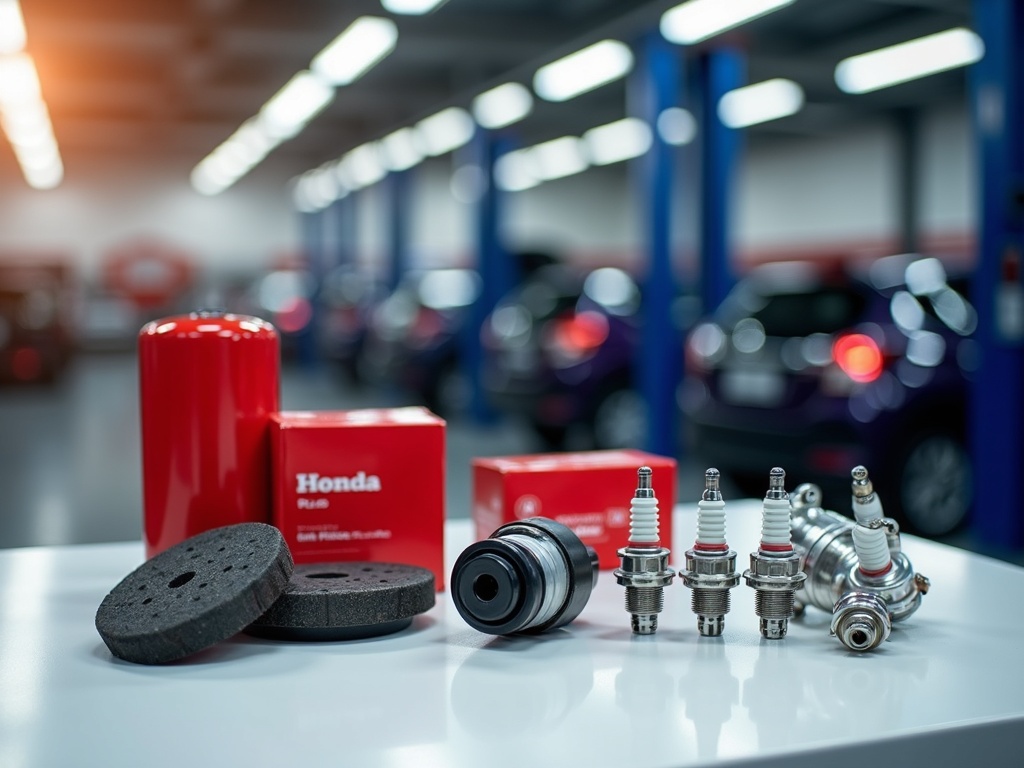
Why Honda Owners Should Never Skimp on Quality Parts
Why Honda Owners Should Never Skimp on Quality Parts
Honda’s reputation is built on reliability. Around the world, millions of Honda owners expect their Civics, Accords, CR-Vs, etc., to turn on in the morning and operate without a hitch. But what many people fail to realize is that Honda’s renowned reliability isn’t a guarantee. In fact, it’s an uphill battle when that part of an engine or transmission fails, and the owner chooses inferior replacement parts.
Generic parts are tempting to buy. Car repairs are expensive, and when it comes to comparing $45 parts that works for some people versus $120 parts that does the same thing, the cheaper option often wins, even if it’s only by circumstance. However, many generic parts do not function as Honda intended.
The Engineering Behind Honda’s Reliability
Honda does not take a bunch of pieces from a box and hope that they all fit together. For example, every piece of your Honda works within specified tolerances and alongside other components with strict parameters. Fuel injectors provide specific sprays needed. Brake pads will connect with Honda rotors and ABS systems in certain ways that make them effective and efficient. Even a simple oil filter has components within its structure designed to work with the oil capacity and flow.
When a generic part is put into a Honda, it’s like asking the vehicle to adapt to something for which it was never intended. Sometimes it works out fine. Other times, it causes problems that do not occur immediately but ultimately will.
What Happens When You Buy Generic Parts
The problems do not always arise in catastrophic failures. For example, your engine will not explode because you put a cheap air filter in place. Instead, it runs more insidiously. That air filter can allow air into its system without being filtered. Over time, months and years, this allows scratches in cylinder walls and on piston rings. Therefore, your engine doesn’t fail; it’s just prematurely worn over time.
But brake parts are where things get dangerous. Cheap brake pads have harder compound materials that may last longer but also wear down your rotors quicker. Alternatively, cheap pads have softer compounds that produce more dust but quickly wear down themselves. Regardless, Honda engineers a balanced system; generic options fail to do the same. If you’re looking for reliable options, places that offer Honda Spare Parts in Perth are likely to carry pieces that align with manufacturer specifications instead of just how they fit.
Electrical components are no different. A cheap alternator might deliver correct voltages, but it’s more erratic with voltage and electrical interference which puts stress on the entire car’s computerized systems. A knock-off O2 sensor can report values that are in the range but not sensitive enough to allow fuel efficiency regulation in transmission. It might get you there, but it won’t get you there efficiently.
The Economics of Cheap Parts
This is where the economics comes into play. For example, you might need brake pads, and top-of-the-line brake pads cost $120 that can get you 50,000 kilometers. Cheap brake pads cost $50 but only get you 25,000 kilometers before they need to be replaced again. Thus, you’re not saving money; in fact, you’re spreading out costs over time for 2x the brake jobs.
Even worse? Those cheap pads are probably going to wear down your rotors unevenly; thus, when you would’ve simply needed new pads from quality parts, now you also need new rotors. Congratulations, you’ve now spent an additional $300 for that "savings."
The same goes for other parts of the system; cheap oil filters that don’t filter as well mean more frequent oil changes and more engine wear over time. Cheap spark plugs that don’t keep consistent gaps result in inefficient combustion patterns which waste gas and damage O2 sensors. What’s more, these initial costs always increase expenses by significant margins when factoring in related failures down the road.
When Generic Parts Actually Work
This is not to say that every replacement part needs to be genuine Honda parts. There are some quality aftermarket options for parts that seem better suited for OEM standards or above.
The difference lies when there are reputable aftermarket manufacturers versus cheap knock-offs.
Reputable aftermarket manufacturers use engineering for better quality control standards. For example, reputable aftermarket options test their products for fit and function as well as longevity. They often come with warranties worth their value. These aftermarket options typically fall somewhere between standard Honda parts and cheap generics, and they’re worth it.
The junk parts come from no-name brands with little to no warranty options who price their pieces so low that they appear amazing on the surface. If you find a part that’s 60% less than all comparable options elsewhere on the market, there’s a reason why.
Where It Matters
Not every part of your Honda is vital to safety and reliability. For example, floor mats do not need to be Honda brand; they’re not interacting with systems or electricals or subject to extremes. The same goes for windshield wiper blades, cabin air filters, interior accessories of all shapes and sizes.
Instead, safety-critical components request quality standards: brake parts (pads and rotors), suspension components (springs, shocks), engine components (interior pieces), transmission components (fluid gaskets), fuel system components (lines and pumps), electrical sensors (lights, indicators). The engineering quality from Honda means much when these systems are stressed.
Timing belts and timing chains are two parts worth special mention; they keep pistons and valves from hitting each other when running simultaneously; one quality belt costs about $100 more than a generic one; if that generic fails within 50,000 kilometers, your repair will be worth thousands afterward not to play a gamble.
Time Is on Your Side
When parts of your Honda are quality replacements instead of generics, they last longer, which makes sense over time. Your Honda can run on maintenance alone through 300,000 kilometers if pieces work as they should. That same Honda will have problems every 150,000 kilometers if replacement costs come through generic units.
Whether you’re looking to drive your car until it’s no longer operable or drive it until it’s time to sell; well-maintained Honda vehicles keep their value incredibly well, and this is even truer when there are documented service records of replacements proven to have better fit than replacements done through generic endeavors.
You can’t cheap out on parts if you want your Honda to stay strong, it’s too valuable an investment for that decision.
There’s No Need to Go Overboard
This is not to say at every juncture one must pay top dollar for any repair imaginable, certain things can be generic from reputable sites or companies worth their salt.
The goal is to understand what you’re getting for your investment, not just blindly buy the cheapest part possible because it makes sense at first.
Research what you need. Read reviews from other Honda owners. Ask mechanics who specialize in Hondas what they recommend or offer, and most importantly, why.
If you find a reputable part dealer or distributor stick with them, develop a relationship with someone who understands Hondas better than anyone else so they can give you updated information specific to your vehicle over time, even better than searching for the absolute cheapest option every time.
Your Honda was built with purpose; give it purpose in longevity by restoring quality pieces intended for use so that the questionable upfront cost makes more sense over time instead of wanting to deal with avoidable failures on the road down the line.